The LSAT Specialist

Mission

My mission is to prepare students to achieve a high score on the LSAT by teaching a concise, well-organized course in a traditional classroom setting. Classes are strategically scheduled just prior to each LSAT test date. I achieved a high score on the LSAT and I am eager to share my knowledge and test taking strategies with individuals who also want to attain a high LSAT score. I look forward to meeting you soon!

—Thomas J. Lowry III
University of Texas School of Law at Austin, J.D. Degree, 1981. LSAT score 95th percentile. B.A. Degree in English, Carleton College, Northfield, Minnesota,1972. Author of the textbook A Systematic Approach to the Law School Admission Test.

Law School

Yale Law School

In The Lawyers, Martin Mayer’s brilliant survey of the legal profession, Mayer describes law school as the “crown jewel” of the American higher education system. Why such high praise? In general, American higher education follows a path of ever increasing specialization. Law school is unique in that it builds on the same broad reading, writing, and analytical skills that are the hallmark of a fine liberal arts education. If you are a liberal arts major with an interest in developing the same core skills that you worked so hard to develop as an undergraduate, law school provides a unique opportunity for you to further your education. This is true whether or not you intend to practice law. As Mayer describes in his book, lawyers work in all kinds of different organizations including business, education, banking, insurance, publishing, and nonprofits, to name just a few of the opportunities available to newly minted lawyers. To successfully apply to law school there are two fundamental requirements: an undergraduate degree and a high LSAT score. It is not necessary to be enrolled in a pre-law program.

Law School Admissions Council (LSAC)

There is a lot of information on the Law School Admissions Council (LSAC) website. It is normal to feel a bit overwhelmed at first. The fastest way to get your bearings is to click on the menu at the top right of the LSAC homepage. Then, click and hold on “LSAT” to see the pull-down menu for LSAT. The LSAT pull-down menu puts everything LSAT related at your fingertips. Take a moment to really study the LSAT pull-down menu. This will save you lots of time and frustration.
Prepmaster Review courses and textbooks are designed with one goal in mind—to prepare individuals to achieve a high score on the LSAT. For this reason, our classes and textbooks focus on the intellectual aspects of the LSAT. The LSAC website, on the other hand, is your one and only source for authoritative, up-to-date information regarding all other aspects of the LSAT including:

Law School Admission Test (LSAT)

The LSAT is the only standardized test accepted by all ABA-accredited law schools in the United States. Each year, more than 100,000 potential law school applicants worldwide take the LSAT. The LSAT is administered in two parts. The first part of the test is a multiple-choice exam. Beginning in August 2024, the scored multiple-choice portion of the LSAT will include two Logical Reasoning sections and one Reading Comprehension section. The second part of the test is a written essay called LSAT Argumentative Writing. You can either take the LSAT at a digital testing center or you can take the LSAT remotely in a digital, remotely proctored environment. It is extremely important to familiarize yourself with the technical requirements for either test modality. The technical requirements are explained in detail on the LSAC website.

Official LSAT Prep Resources

LSAC official LSAT prep resources are your indispensable source for extra practice material. According to the LSAC website:

“Research shows that taking more full practice tests is the most effective way to prepare for the LSAT.”
Click below to hone your test taking skills by practicing with free online practice tests:
Perhaps it is old fashioned, but I love to study with a book in hand. If you also prefer to study with a book, be sure to purchase The New Official TriplePrep Volume 2 (see link below). The three actual LSAT exams contained in this book reflect the latest LSAT format introduced in August 2024.
—Thomas J. Lowry III
Author, A Systematic Approach to the Law School Admission Test
Take advantage of Amazon’s low prices, fast shipping, and generous return policy when you purchase books on the Prepmaster Review website. You receive Amazon’s usual price for the books you purchase. The books you select will appear in your Amazon Shopping Cart ready for checkout. Prepmaster Review is a participant in the Amazon Services LLC Associates Program, an affiliate advertising program designed to provide a means for sites to earn advertising fees by advertising and linking to Amazon.com.
Click below to purchase The New Official LSAT TriplePrep Volume 2 on Amazon:

The Official Guide to U.S. Law Schools

The Official Guide to U.S. Law Schools was previously available in book format. This information is now provided free of charge on the LSAC website.

Credential Assembly Service (CAS)

The Credential Assembly Service (CAS) streamlines the law school admission process by allowing applicants to have all transcripts and recommendations sent only once to LSAC.

Preparing for the LSAT

Prepmaster Review provides professional instruction in a traditional classroom setting using the most up-to-date and effective materials available. Your instructor teaches basic skills starting with relatively simple examples and then works forward to help you master more difficult questions. Once you attend each lecture, you are drilled using carefully selected questions designed to hone your LSAT skills.
With Prepmaster Review you attend a concise, well-organized seminar with superb instructors which is conveniently scheduled over a single weekend.
Prepmaster Review utilizes a divide and conquer strategy. Think of taking all the prior LSATs that have been administered. Now imagine cutting out each question with a pair of scissors. As you work, place each question in a separate pile that represents a particular question type. (In Logical Reasoning, for example, some of the question types we identify are evidence questions, deductive reasoning questions, inference questions, consistency and contradiction questions, argument recognition questions, etc.) Our seminar teaches students how to identify each question type, develops a basic approach for each question type, and includes extensive practice material organized by question type and generally arranged from less difficult to more difficult. 
Another way to describe our basic approach is that first we look for “patterns” and then we “practice.”

LSAT Classroom Seminars

The primary advantage of the Classroom Seminar is the discipline imposed. Contact with teachers and students in a classroom setting is a powerful motivational tool. Classes are scheduled on a weekend close to your LSAT test date for maximum effectiveness. Classes are taught by law students or law school graduates who scored at the 90th percentile or higher on the LSAT. Classes include diagnostic testing; 16 hours of expert classroom instruction with extensive practice exercises; all practice exercises are administered, scored, and fully explained in class. Problem sets worked during class are the equivalent of taking three full length LSATs. A sample LSAT is administered under actual test conditions. The sample LSAT is scored before you depart the class. Finally, several practice tests are provided for additional practice following the course.

Seminar Instructor

Thomas J. Lowry III, University of Texas School of Law at Austin, J.D. Degree, 1981. LSAT score 95th percentile. B.A. Degree in English, Carleton College, Northfield, Minnesota, 1972. Author of the textbook A Systematic Approach to the Law School Admission Test.

Seminar Location

Hilton Garden Inn NW Arboretum, 11617 Research Blvd, Austin, TX 78759.
Ph. 512-361-6879

Class Schedule

The LSAT Classroom Seminar is strategically scheduled over a single weekend just prior to each LSAT test date.

Saturday

Check In
8:30 to 9:00 a.m.

Introduction and LSAT Strategies
9:00 to 9:30 a.m.

Diagnostic Exam
9:30 to 10:15 a.m.

Scoring the Diagnostic Exam
10:15 to 11:00 a.m.

Reading Comprehension
11:00 a.m. to 1:00 p.m.

Lunch
1:00 to 2:00 p.m.

Logical Reasoning I
2:00 to 6:00 p.m.

Sunday

Logical Reasoning II
8:30 to 11:30 a.m.

Lunch
11:30 a.m. to 12:30 p.m.

Argumentative Writing Sample and Personal Statement
12:30 to 2:00 p.m.

Planning for Further Study
2:00 to 2:30 p.m.

Simulated LSAT
2:30 to 5:00 p.m.

Scoring the Simulated LSAT
5:00 to 6:00 p.m.

Curriculum

Test-Taking Strategy

Introduces strategies designed to increase your speed and accuracy on the LSAT. Topics covered include: examination format, working continuously, breaks, testing order, and post-test decisions.

Diagnostic Examination

Careful, objective measurement of your performance on a diagnostic examination will allow you to approach the LSAT more intelligently. The Diagnostic Examination introduces the multiple-choice question types and the 120-180 LSAT scale. You will learn approximately what percentage correct is required to attain a particular score. For example, what percentage correct is required to earn a score in the top 10%? You will begin to set personal goals. Topics covered include: raw score, % correct, percentile, and the score conversion table used to estimate your LSAT score.

Reading Comprehension

Treats reading passages as arguments. Introduces active reading and time management in reading comprehension. Topics covered include: selecting the best answer, transitional words, over and under statements, primary purpose questions, and inference.

Logical Reasoning I

Logical Reasoning questions comprise two-thirds of the scored portion of the LSAT. That's why Prepmaster Review seminars spend so much time on Logical Reasoning. Presents short arguments as puzzles. Topics include: inference and deduction, argument recognition, evidence, and consistency and contradiction.

Logical Reasoning II

You will apply the principles you learned in Logical Reasoning I to practice sets of gradually increasing difficulty. Your instructor will spend extra time explaining the really difficult questions. You will leave this class with a well earned sense of Logical Reasoning mastery that will pay big dividends on test day!

Argumentative Writing Sample

We make sure you know exactly what admission committees are looking for on the Writing Sample and then teach you how to deliver the perfect essay. Explains the use of "issue spotting" to develop a clear, concise, and effective essay.

Personal Statement

Learn how to write a distinctive, well written personal statement that will help you stand out from the crowd.

Simulated LSAT

A simulated LSAT is administered and scored. Actual test conditions are carefully reproduced. Your simulated LSAT is carefully scored before you depart the class.

Planning for Further Study

Focuses on proper use of study time. You will develop a personal study schedule based on your performance on the Simulated LSAT.

Key Success Factors

Top-Tier Instructors

Classes are taught by law students or law school graduates who scored at the 90th percentile or higher on the LSAT.

Scheduled for Maximum Benefit

Our classroom seminar is strategically scheduled just prior to the actual LSAT. That way you won't forget what you have learned before you take the LSAT.

Diagnostic Test

We begin our seminar with a carefully designed diagnostic test which pinpoints your strengths and weaknesses so you know exactly what to focus on during the seminar.

Test-Taking Strategy

We teach you a wide variety of test-taking strategies which will increase your speed and accuracy on the LSAT.

Timed Drills

Approximately one-third of class time is spent working on carefully designed problems under test conditions. You receive immediate feedback on your performance.

Simulated LSAT

At the end of our course you take a simulated LSAT under actual test conditions. The simulated LSAT is scored before you depart the seminar.

Free Repeat Policy

Attend any subsequent seminar taught by Thomas J. Lowry III free of charge if you don't get the score you need or if you feel you need additional instruction. In order to qualify for a free repeat, you only need to have paid for a prior seminar taught by Thomas J. Lowry III. You do not need to have actually taken the LSAT. Please bring your prior textbook to the seminar. Your free repeat registration does not include a new textbook unless the textbook has changed. Free repeat policy is subject to instructor availability.

Seminar Dates

Most students taking the LSAT Classroom Seminar schedule the seminar just prior to their actual test date. You may also want to consider taking the seminar well in advance of your actual test date. This will give you more time to study prior to taking the LSAT. If desired, you can even repeat the LSAT Classroom Seminar free of charge before you take the LSAT.

2025 – 2026
LSAT Testing Year

Seminar dates:
Aug 2-3, 2025

August Test Dates
Aug 6, 7, 8, 9

Seminar dates:
Aug 30-31, 2025

September Test Dates
Sep 3, 4, 5, 6

Seminar dates:
Sep 27-28, 2025

October Test Dates
Oct 3, 4, 6, 7

Seminar dates:
Nov 1-2, 2025

November Test Dates
Nov 5, 6, 7, 8

Seminar dates:
Jan 3-4, 2026

January Test Dates
January 7, 8, 9, 10

Seminar dates:
Jan 31 – Feb 1, 2026

February Test Dates
Feb 6, 7

Seminar dates:
Apr 4-5, 2026

April Test Dates
Apr 9, 10, 11

Seminar dates:
May 30-31, 2026

June Test Dates
June 3, 4, 5, 6

Note: Law School Admissions Council test dates are subject to change. Be sure to check the LSAC website. LSAT® is a registered trademark of the Law School Admission Council.
Classes fill quickly and some seminar dates may not be available. The seminar registration form on this website includes a pull down menu indicating which seminar dates are currently available for the Austin, Texas location.

Price

$499. Sales tax, where applicable, is included in this price.

Free Repeat Registration

Your free repeat registration does not include a new textbook unless the textbook has changed. Please bring your prior textbook to the seminar.
Click below if you have previously paid for a LSAT Classroom Seminar taught by Thomas J. Lowry III and wish to retake the seminar:

Seminar Registration

Click below to register for a Austin, Texas LSAT classroom seminar:

Status/ Changes

Click below to update your email address or telephone number, to change your seminar date, to cancel your registration, or to address any other concerns you may have:

LSAT Self Study Course

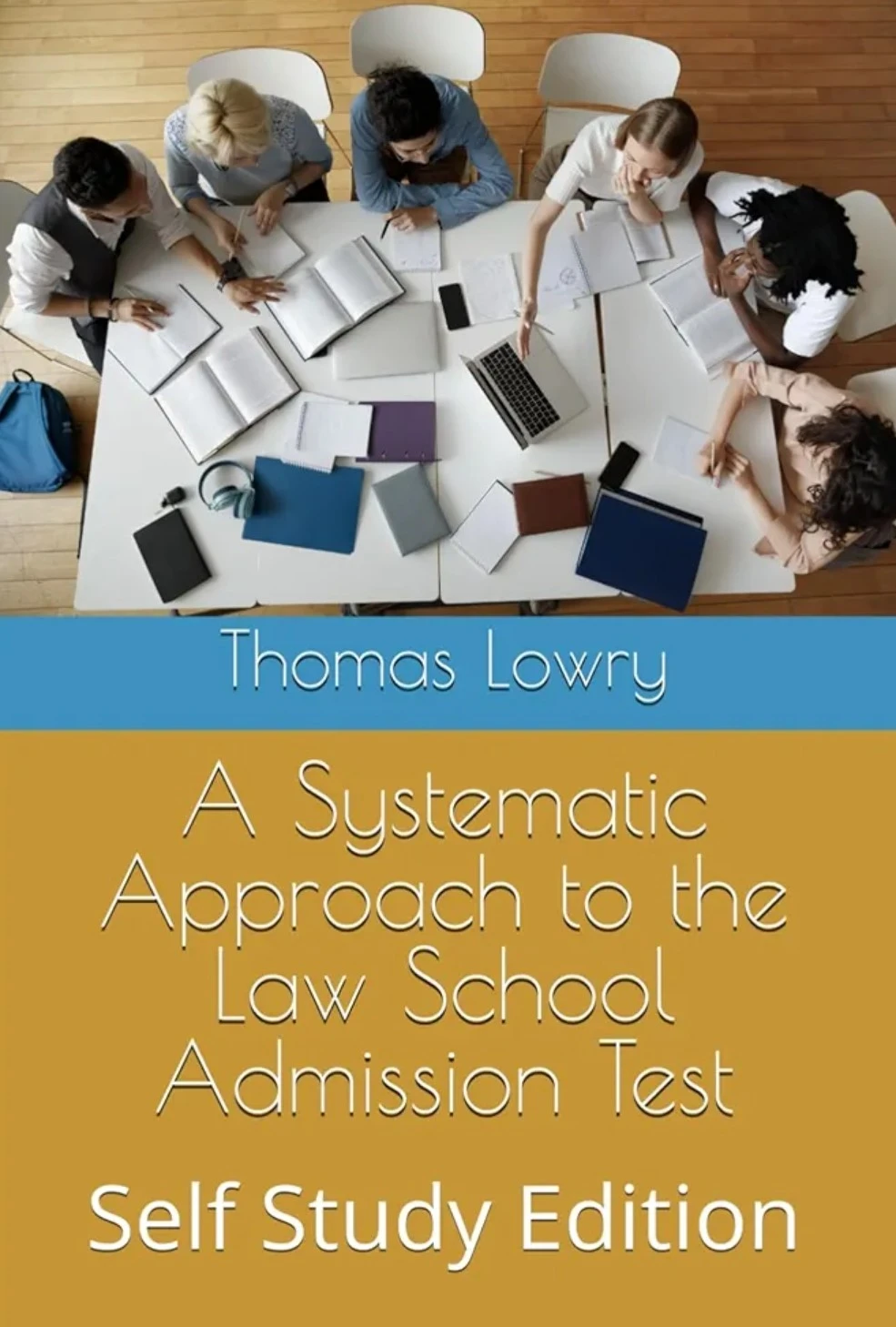
If you are highly motivated and learn best by studying on your own, you can prepare for the LSAT with the self study edition of our textbook. The self study edition of our textbook includes a comprehensive six-week study plan.
If you want to get a head start preparing for the LSAT prior to attending our LSAT Classroom Seminar, the self study edition of our textbook is ideal because it contains different practice questions than the classroom edition of our textbook while still following the same general approach as the classroom edition of our textbook.
The comprehensive six-week study plan included in the self study edition includes diagnostic testing to identify your strengths and weaknesses; separate chapters for each question type show you how to approach each question type with understanding and confidence; extensive practice exercises with complete explanations for every question develop your test-taking skills; finally, a self-administered sample LSAT allows you to measure your progress with precision.
Take advantage of Amazon’s low prices, fast shipping, and generous return policy when you purchase books on this website. You receive Amazon’s usual price for the books you purchase. The books you select will appear in your Amazon Shopping Cart ready for checkout. This website is a participant in the Amazon Services LLC Associates Program, an affiliate advertising program designed to provide a means for sites to earn advertising fees by advertising and linking to Amazon.com.
Click below to purchase A Systematic Approach to the Law School Admission Test, Self Study Edition on Amazon:

Student Comments

“I doubt I have ever made a wiser educational investment than the one I made to take the Prepmaster Review LSAT Classroom Seminar and Self Study Course. I am convinced this program was the key to my scoring a 175 on the LSAT. The classroom seminar boosted the results I had already achieved with your self study course. Your materials closely approximated the questions I encountered on the actual LSAT.”
—David Murphee, Auburn, Alabama
“I received a 90th percentile LSAT score after taking your classroom seminar. I am urging all the prelaw students at my university to register for the Prepmaster Review LSAT Classroom Seminar. I would like to note that the instructor at the Memphis course location was extremely knowledgeable, professional, and above all helpful. With instructors like this it is no wonder Prepmaster Review is so successful.”
—John Wilson Eaton, III, Bartlett, Tennessee
“I finished another, much more expensive, six-week course before I enrolled in your LSAT Classroom Seminar. Prepmaster Review is definitely the superior course—at any price—but considering cost, Prepmaster Review really stands out as the best value.”
—Robert Dullis, Dallas, Texas
“Just a hurried note to thank your Atlanta instructor for a job well-done. The results of my December LSAT were very satisfying. I scored 163. Without Prepmaster Review I could not have done half so well. Again, thank you.”
—Jonathan deJong, Atlanta, Georgia

Admissions Secrets

Our philosophy is simple: careful preparation and hard work generally lead to success. This philosophy is just as applicable to law school admissions as it is to other areas of life. Your LSAT score is one of several factors in the admissions process over which you exercise a degree of control. (After all, there is little you can do, at this point, to alter your GPA.)
In general, schools are looking for higher LSAT scores and undergraduate grades. Many are also looking for unique work experience, thoughtful letters of recommendation, and well-drafted personal statements. Most law schools use an index of LSAT and GPA results to classify an applicant as a “presumptive admit,” a “maybe,” or a “presumptive denial,” depending on the school’s targeted range of scores. Thus, at most schools that middle group (“maybe”) becomes the playing field where factors beyond LSAT scores and GPA results are most important.
Click below to learn more about important steps students can take to maximize their admission chances:

Work at Raising Test Scores

The obvious first step toward getting into law school is to thoroughly prepare for the LSAT. This will increase your chances at every law school you apply to. Applicants have various options for study including preparation materials available from the Law School Admission Council and various books available at bookstores. Professional classroom instruction is another option that works well for many students who may not have the time or patience to “do it on their own.” Above all, don’t underestimate the crucial importance of practice, practice, practice. You can become an expert on the LSAT, but without extensive timed practice you may not really develop the necessary skills.

Obtain the Right Kind of Letters of Recommendation

Law schools are looking for dynamic and well-rounded individuals who are going to add something special to the incoming class. Individuals who have unique work experience or special qualifications are highly sought after by admissions officers. A letter of recommendation is one way to express these differences.
Most important is how well the letter writer knows the applicant. It is the quality of the relationship, not the perceived importance of the letter writer that is important. Thus, a letter from a federal judge who doesn’t really know you is not going to come across as well as a letter from someone who has worked with you directly. Letters from academic contacts are especially helpful because they speak directly to your ability to handle a rigorous J.D. curriculum.

Write a Killer Personal Essay

This is a crucial factor for many schools who must sift through that middle group of “maybe” applicants. Most schools do not interview applicants, which leaves the personal essay as the primary tool that is used to separate applicants that have similar index numbers. Your essay needs to be memorable but not outrageous. Law schools seek serious students so you need to walk a fine line between writing a compelling but not outrageous essay. You don’t want to write the same essay everyone else is writing. For example, you probably don’t want to write about how you have always wanted to be a lawyer or how your family is filled with lawyers. Rather, this is your chance to talk about something that is not in your transcript or letters of recommendation.

Make Sure Your Application is Professional Looking

Make sure you have filled out the application fully and without errors. Schools have very little tolerance for sloppy applications. Try to show excellence in as many ways as possible including the physical appearance of your application. In the case of paper forms, make copies of the forms to fill out by hand. Review your work. Practice typing the information onto another copy to make sure everything fits. Then type your final application. All this effort will not go unnoticed by your admissions officer. (Admittedly, paper forms are a rarity these days. Nevertheless, the same principles apply to online forms.)

Apply to More Schools

Determine the quality and number of schools to which you apply as strategically as possible. For example, apply to five schools rather than just three. Add one school that matches your admissions profile and one additional “safety” school. This simple action will increase your chances a great deal at a relatively small financial cost.

Apply Early

Another key strategy is to apply early. Many schools use a rolling admissions policy in which they accept or reject candidates as applications arrive. A law school which has 200 seats available may only have 15 seats left in February. It always helps to apply early.

Don't Give Up If You Are Placed On a Waiting List

If you are placed on a waiting list, be sure to call the admissions office to express your continued interest. Many students on the waiting list will make other plans. This increases your chances if you let the school know you are still available.

Reading List for Entering Law Students

The books I read the summer before I attended law school had a profound effect on my law school experience. My favorites were The Bramble Bush: On Our Law and Its Study by Karl Llewellyn; Gideon’s Trumpet by Anthony Lewis; To Kill a Mockingbird by Harper Lee; and One L: The Turbulent True Story of a First Year at Harvard Law School by Scott Turow.
—Thomas J. Lowry III
Author, A Systematic Approach to the Law School Admission Test
Take advantage of Amazon’s low prices, fast shipping, and generous return policy when you purchase books on this website. You receive Amazon’s usual price for the books you purchase. The books you select will appear in your Amazon Shopping Cart ready for checkout. This website is a participant in the Amazon Services LLC Associates Program, an affiliate advertising program designed to provide a means for sites to earn advertising fees by advertising and linking to Amazon.com.
Click below to view reading list and add books to your Amazon Shopping Cart:
Scroll to Top